Showing posts with label internet. Show all posts

Tuesday, July 1, 2014

Cats and War

We all know by now that the Internet is run by cats. But the social media accounts of Islamist fighters in the Middle East?

Apparently, some ISIS fighters have been posting these provocative images of cats posed with guns and other weapons recently on their Twitter and Instagram accounts, accompanied by the hashtag #CatsOfJihad.

While these strangely cute photos may be useful as a recruiting tool to incite more young people to join the Jihadist movement, and may even be moving Westerners to join, there is something ironic about using images of soft and cuddly animals posed with deadly weapons to advertise war.

We all know how deadly war is to humans. But many people don't stop to think about how deadly it is to non-human animals. Both domesticated and wild animals are dragged into, harmed by, and killed by wars. Dogs, horses, cattle, bees, pigeons, elephants, dolphins, and countless other animals have been used as military service animals for thousands of years, and there is no way to know how many have been "sacrificed" in all of the wars in which they have "served."

And then as "civilians," they have suffered just as civilian humans have from bombing and fighting in their lands and homes, as well as from the needs of both the soldiers and refugees who often feed on them. Not only that, but they are affected by wars for years afterwards, thanks to the environmental consequences of chemical weapons, burning of fuels, dumping of ammunition, testing of bombs, and radioactivity.

War means death--death to humans, and death to animals. And no amount of squee photos of kittens hugging grenades will change that sad fact.




Sunday, January 20, 2013

Pandas and the Internet

Pandas are one of the most popular of the charismatic animals. They rank very high on what sociologists Arluke and Sanders call the sociozoologic scale (along with dolphins, polar bears and other large, cute and cuddly animals), and therefore we are not just enamored of them, but we don't blink an eye when it comes to spending large amounts of resources to saving them, while letting other less charismatic animals perish by the billions.

Baby pandas are among the cutest of all of the charismatic animals, so each time a new panda is born at a zoo or a conservation facility in China, the Internet explodes with new photos and videos.

This little guy, Xiao Liwu, was born at the San Diego Zoo in 2012 and during a veterinary exam in December was so thrilled with his new green ball that he wouldn't stop hugging it throughout his exam. And reading that, 2 billion people collectively said "aawwwww."

At China's Hetaoping Research and Conservation Center where pandas are bred and released to the wild, the caretakers go through an amazing amount of steps to make sure that the pandas who are to be released don't imprint on the humans, resulting in odd photos like this one.

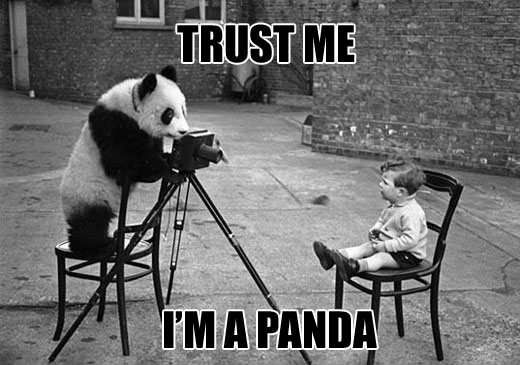
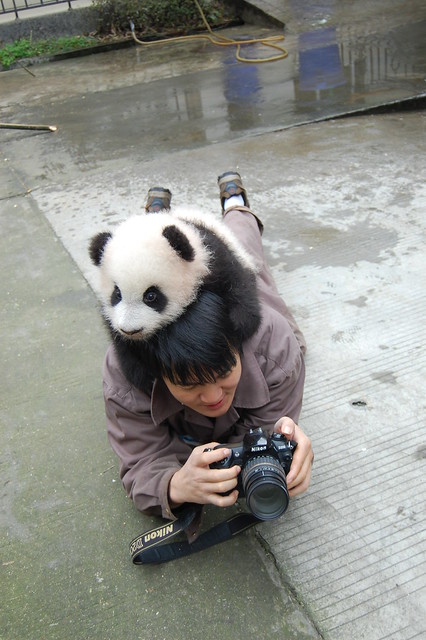
Recently, another odd photo has been circulating the Internet. This one is a vintage photo, and I can't seem to find anything about where it came from or what the context is. But it recently turned into a macro, based on the popular "I have no idea what I'm doing" meme.


What I find so interesting about this particular image is that we are just bananas about pandas right now; not too many other animals have their own webcams the way that pandas do, so that bored office workers can check in on them all day long. Captive pandas have cameras in their faces constantly, so the idea that this particular panda may have gotten hold of a camera and turned the tables on a human subject is amusing.


Or, as in the case of this last panda, he simply decided if you can't beat them, join them.

What if cats had their own Internet?

I came across this macro the other day and thought it was a perfect way to capture how completely and utterly cats have taken over the Internet; I feel like an entire class can be devoted to discussing this one issue.

Saturday, January 19, 2013

Animals sitting like humans

One of the reasons we find animals on the Internet so fascinating are the ways that they so often seem so like us. Recently, a popular image theme is "animals who sit like humans." It's difficult to see these pictures and not imagine these dogs, cats, frogs, and other animals as small (or large), extra cute people.


Cats, Cats, Cats

Without cat pictures, cat memes, and cat videos, the Internet would collapse. There simply isn't enough pornography, sexting, and Words with Friends to keep the Internet operational without the presence of cats.

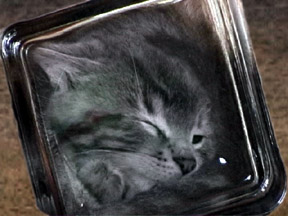
Cats have been ubiquitous on the internet since Bonsai Kitten, an Internet satire site which claimed to sell the tools to turn kittens into miniature "bonsai" cats by stuffing them into glass jars. The site outraged thousands of concerned citizens who flooded the phone lines of animal rights groups in the early 2000s, hoping to get the site shut down.

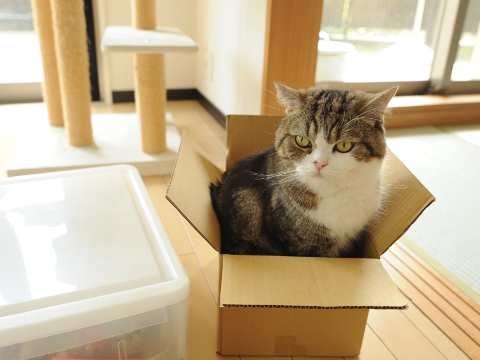
In the last few years, Maru has dominated the Internet. A Scottish fold cat who lives in Japan, Maru's fame derives from the fact that he is not only adorable, but he is especially adept at jumping into boxes. Maru's youtube channel is one of the most popular in all of Japan, and his videos have been viewed almost 200 million times.

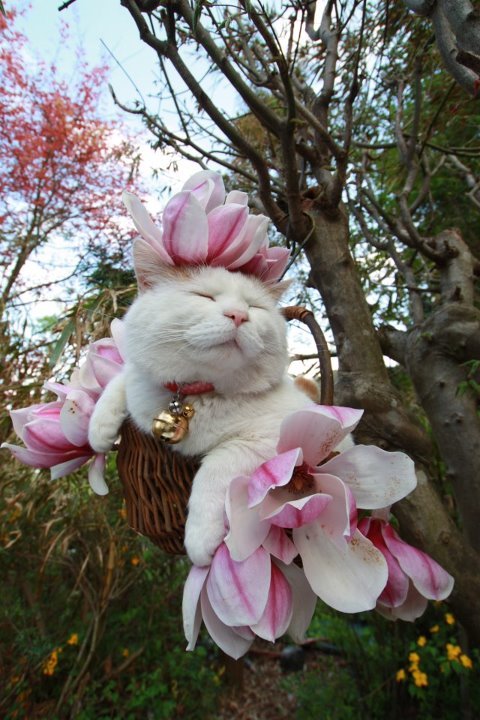
Another popular cat, also from Japan, is Shironeko. Shironeko is known as the most relaxed kitty in the world, for his habit of letting his caretaker place objects on his head for photographs, usually with what looks like a smile on his face.

Since late 2012, however, the most popular cat on the Internet is Grumpy Cat. Her real name is Tardar Sauce, and, according to her guardian, she is not grumpy at all. Yet thanks to the unfortunate shape of her mouth, she has become an incredibly popular Internet meme, being used to demonstrate disdain about Christmas (her popularity took off in December), happiness and love, and apathy about every subject.

Why are cats like Maru and Grumpy Cat so popular on the Internet? Cats are ubiquitous in our own lives--there are more cats in our homes than any other animal--so it makes sense that they would be the most popular Internet animal as well. They are also relatively serious and somewhat inscrutable--in fact, they don't have nearly as many facial muscles as do dogs, so it's hard to read their facial expressions, which means we often have to guess as to what they are thinking.  And finally, cats were not domesticated like dogs were--to be a partner to humans. For that reason, they're not easy to train, and in fact, it's often hard to get a cat to do anything at all that we want them to do. So the idea of using cats as online representations for our innermost thoughts, like Grumpy Cat, or watching them do clever and fascinating things, like Maru, or making them hold eggplants on their head, like Shironeko, is much more exciting with cats than with dogs, who, after all, live to please us.

Welcome to HASImages!

Welcome to the newest project of the Animals and Society Institute, HASImages!

HASImages is inspired by a blog I visit frequently for my sociological teaching called Sociological Images, created by sociologists Lisa Wade and Gwen Sharp, which is intended to encourage readers to use their "sociological imagination" in everyday life. The blog features images (as well as videos, charts, statistics, and the like) along with commentary that highlights the sociological insights found in those images.

Because I teach sociology, I'm always on the lookout for new resources to use in my classes, and I've found the materials on Sociological Images to be invaluable for my teaching. I also love to use images in my human-animal studies teaching, and figured that other faculty would too. After all, why wouldn't you use images of pandas, sloths, and kittens as often as you can in your classes?

And while finding cute images of animals on the Internet is no tough task (just take a quick look at some of my favorite sites like cuteoverload, dogshaming, or the daily bunny), I thought it might be helpful to not only provide the best, the cutest, and the most intriguing animal and human-animal images in one location, but to also provide commentary on those images.

This blog, then, is aimed at faculty who teach human-animal studies courses and who are looking for material to use in their classes. Please feel free to take what you like!

We're also looking for contributors. Please send images that you think are interesting, thought provoking, or challenging to us at margo@animalsandsociety.org and if you'd like to contribute a commentary or analysis, let us know that as well. We'd like to hear from you!

Our first image, to open our new blog, is one of the most iconic animal images on the Internet. Known as "Happy Cat," it's the original lolcat--a photo of a cat with a caption using poor grammar called lolspeak. Computer programmer Eric Nakagawa and his girlfriend Kari Unebesami capitalized on the popularity of Happy Cat and images like it, and in 2007 created the website Icanhascheezburger.com to showcase lolcats to a public greedy for them. At the height of its popularity, the website was getting one and a half million visitors per day.

While lolcats are not as popular today as they were a few years ago, animals are just as popular as ever on the Internet, starring in videos, featured in memes, and headlining websites and tumblrs of every variety. Check back here frequently to keep up with the latest in animal images!