Showing posts with label cats. Show all posts

Thursday, January 15, 2015

Pointlessly Gendering Cats and Dogs

Last December in Aldi (an Irish grocery chain), my partner and I were looking for a Christmas present for his dog. While sifting through the pet section, we noticed that perhaps it was a good thing his dog isn't female, because the only doggy stockings for sale were for male dogs. 


According to Armitage Pet Care ("The largest independent manufacturer and distributor of branded pet accessories and treats in the UK"), kitty treats are for "good girls" and doggy treats are for "good boys." The cat and dog caricatures and packaging colors appear to be gender neutral, but the labels are unnecessarily gendered. Upon further investigation, the gendering process extends beyond Santa's workshop: "Good Boy" applies to their entire line of canine treats, and "Good Girl" refers to their line of feline treats. What's more, this gender assignment is presumed to be implicit. The Armitage website does not clarify which product line refers to which species.

Here, the gendered identity of companion animals is taken for granted

Sociologists have noted that humans tend to transfer their gender role expectations onto nonhumans (and nonhumans also become extensions of human gender expressions). Dogs tend to be masculinized; cats tend to be feminized. Regardless of the animal's actual sex, they will be socialized according to the gender of their owner. My brother's pit bull is female, for example, but she plays rough and rowdy. She practically jumps off the walls because of how my brother has socialized her and how he engages play with her (as other pit bull guardians can attest, many pits are quiet and gentle). We also know that that many men are hesitant to have their male companion animals spayed for fear of emasculating them (a serious problem given the high death rates in kill shelters for discarded and homeless animals). Gender may be socially constructed, but its consequences are real indeed.


Dr. Lisa Wade of Sociological Images regularly deconstructs "unnecessarily" or "pointlessly" gendered cultural artifacts on the website and its corresponding Pinterest page to demonstrate how powerful gender roles are on the social imagination. Of course, gendering products is not "pointless." This action has a very intentional social purpose: to maintain and reproduce difference (which, in turn, maintains and reproduces social inequality). Nonhuman bodies are often politicized in the process, becoming representations of human stratification.

In many cases, the aggravation of these differences is much more conscious because it also serves to increase consumption. A heterosexual couple can't just share body wash, for instance. He has to have the forest-scented, blue soap in the black bottle labeled "For men;" she has to have the pink strawberry soap in the flowery bottle. Not surprisingly, there is often a feminine tax as well, with women's products costing more than equivalent products for men. As sociologists understand the economic sphere to be the origin of social structure (and inequality), it is no surprise to see such heavy representation of difference in the marketplace.

My male cat is not going to care either way if he is a good "boy" or "girl" as long as he gets his paws on that catnip. My partner's dog probably doesn't care if he is a good "doggy" or a good "kitty" either, and would gladly chomp down on anything and everything in the "Good Girl Christmas Cat Stocking." In the end, we settled on a gender neutral (and, subsequently, a much less annoying) chew toy.

References

Adams, C. and J. Donovan. 1995. Animals and Women: Feminist Theoretical Explorations. Durham, NC: Duke University Press.

Ramirez, M. 2006. "'My Dog's Just Like Me': Dog Ownership as a Gender Display." Symbolic Interaction 29 (3): 373-391.

Tuesday, July 1, 2014

Cats and War

We all know by now that the Internet is run by cats. But the social media accounts of Islamist fighters in the Middle East?

Apparently, some ISIS fighters have been posting these provocative images of cats posed with guns and other weapons recently on their Twitter and Instagram accounts, accompanied by the hashtag #CatsOfJihad.

While these strangely cute photos may be useful as a recruiting tool to incite more young people to join the Jihadist movement, and may even be moving Westerners to join, there is something ironic about using images of soft and cuddly animals posed with deadly weapons to advertise war.

We all know how deadly war is to humans. But many people don't stop to think about how deadly it is to non-human animals. Both domesticated and wild animals are dragged into, harmed by, and killed by wars. Dogs, horses, cattle, bees, pigeons, elephants, dolphins, and countless other animals have been used as military service animals for thousands of years, and there is no way to know how many have been "sacrificed" in all of the wars in which they have "served."

And then as "civilians," they have suffered just as civilian humans have from bombing and fighting in their lands and homes, as well as from the needs of both the soldiers and refugees who often feed on them. Not only that, but they are affected by wars for years afterwards, thanks to the environmental consequences of chemical weapons, burning of fuels, dumping of ammunition, testing of bombs, and radioactivity.

War means death--death to humans, and death to animals. And no amount of squee photos of kittens hugging grenades will change that sad fact.


Thursday, May 22, 2014

What Makes a Family?

Clearly, at least in the wealthy countries of the industrialized and post-industrialized world, our pets are our family. For millions of people today, we dote on our companion animals, buying them the best food, toys, and beds (when they are not sleeping in ours), taking them on vacations, and including them in our family photos.


Fighting over catnip sprouts. by Jason Houge
But what about feral cats?


The very definition of feral--from the Latin fera, meaning "wild beast"--suggests that they are clearly not members of the family. These domesticated (but not tame) cats, who live around the periphery of human societies, are viewed as pests, disease hosts, wildlife killers, and worse by most observers. They are subject to a wide variety of control and eradication policies around the world, up to and including killing them, although in the United States, it is still illegal to intentionally kill a cat, even if feral. But that doesn't mean that it isn't done.


Diane ran past some visitors who came to see the kittens. By Jason Houge
Still, many animal lovers care for the cats in feral cat colonies, feeding them, and catching them in order to have them spayed and neutered or given medical care. 


But one man, photographer Jason Houge, who shares his rural property with a colony of feral cats in Green Bay, Wisconsin, takes "family photographs" of them as well.

His lovely, and often intimate photos of the many cats on his property, all of whom he cares for, makes them feel as if they are truly part of his family. This is so different from the way that feral cats are usually seen; to borrow a phrase from anthropologist Mary Douglas, they are "matter out of place"  (1966).

Like dirt, to which Douglas was referring, they are not just dirty, but they literally don't fit into our conceptual categories; they are not cute and cuddly, you cannot hold them--they are not PETS. Like pigeons, another culturally problematic animal, they are hated.

Family Portrait: Ernie, Mumma and their 9 kittens. By Jason Houge
But Houge doesn't just not hate them, and he doesn't just care for them. His photos almost re-domesticate them, making us remember what makes us love cats in the first place, and want to bring them into our families in the first place--their playfulness, their lovingness, and yes, a bit of their wildness too.

This last photo he's titled "Family Portrait," and it includes the entire kitty family.

Tuesday, May 7, 2013

Cat Imagery in the Suffrage Movement

Cats were a common symbol in suffragette imagery.  Cats represented the domestic sphere, and anti-suffrage postcards often used them to reference female activists.  The intent was to portray suffragettes as silly, infantile, incompetent, and ill-suited to political engagement.

Mocking anti-suffrage postcard

Reads:  "We don't care if we never have a vote."
Photo from the Palczewski Suffrage Postcard Archive

Mocking anti-suffrage postcard
Photo from the Palczewski Suffrage Postcard Archive

Another common theme in anti-suffrage cartoons and postcards was the bumbling, emasculated father cruelly left behind to cover his wife's shirked duties as she so ungracefully abandons the home for the political sphere.  Oftentimes, cats were portrayed in these scenes as symbols of a threatened traditional home in need of woman's care and attention.


Public sentiment warmed to the suffragettes as police brutality began to push women into a more favorable, if victimized, light.  As suffragettes increasingly found themselves jailed, many resisted unfair or inhumane imprisonment with hunger strikes.  In response, jailers would often force-feed female prisoners with steel devices to pry open their mouths and long hoses inserted into their noses and down their throats.  This caused severe damage to the women's faces, mouths, lungs, and stomachs, sometimes causing illness and death.  The British government responded by enacting the Prisoner's Act of 1913 which temporarily freed prisoners to recuperate (or die) at home, at which time they could be rearrested.  The intention was to free the government from responsibility of injury and death from force feeding prisoners.  This act became popularly known as the "Cat and Mouse Act," as the government was seen as toying with their female prey as a cat would a mouse.  Suddenly, the cat takes on a decidedly more masculine, "tom cat" persona.  The cat now represented the violent realities of women's struggle for political rights in the male public sphere.

Sympathetic suffrage  postcard referencing the  Prisoner's Act of 1913
Photo from Collectors Weekly


Saturday, March 23, 2013

Taxidermied Cats

Taxidermy is all the rage these days. This year we have two new reality shows focusing on taxidermy, American Stuffers and Immortalized, Etsy is full of arts and crafts made from dead animals, and artists like Sarina Brewer, Kasey McMahon, and Reid Peppard all uutilize taxidermied animals in their art.

And besides the wild animals who are typically immortalized by taxidermists, generally after they have been shot and killed by hunters, there's now a growing pet preservation industry serving pet guardians who want to forever immortalized their beloved companion animal.

And then there's this cat rug, made by a taxidermist from a cat hit and killed by a car in New Zealand.

The public response to the cat seems to range from artistic appreciation to disgust and horror, as might be expected.

For me, perhaps my concern lies with the fact that this was not simply a cat, but a cat who had a relationship with a person, and, thus, a social identity. It seems to cross the boundary between the impersonal form of taxidermy and exploitation found with bear or zebra rugs, even while maintaining the personal identity of the individual animal, a distinction noted by Emory University graduate student Christina Colvin in a recent talk on taxidermied pets. This cat once had a name, an identity, a past, and, most uncomfortably, all of that can be read in its eerily preserved, for eternity, face.


Thursday, February 7, 2013

Monopoly unveils its new token...

And it's a cat!

Most of us remember playing Monopoly as kids, and fighting over the best tokens (who ever wanted the thimble?).  Another terrible token? The iron. At least that's the word of Monopoly fans, who just voted to replace the iron with a cat, which will be available later in the year, and will join the Scottie dog, one of the most popular of the older tokens. Now Monopoly will pit dog lovers against cat lovers to see who is the greediest!


Wednesday, January 30, 2013

My Cat is Sad

This poem by Spencer Madsen does a heartbreaking job of conveying the contradictions inherent in living with a companion animal. We bring home a cat, dog, or other animal because we want to spend our life with them.

And in the best of all worlds, we do, spending time with our new friend, playing with them, taking them for walks if they're dogs, buying them toys, and snuggling with them on the couch.

But the reality is, we also spend a great deal of time away; at work, out with friends, out running errands, on vacation or visiting family. We ignore our pets an awful lot of the time.

What must it feel like to be small, alone among your own kind, and often waiting--for attention, for dinner, for love?

And then imagine how much worse it must be for all those outdoor "pets," the dogs who live at the end of chains, or the rabbits who live in barren hutches? Or for the millions of former pets, once loved, or at least well treated, now waiting in a cage or pen at the shelter, not knowing why you're there, what happened to your family, and what will be your fate?

This is another beautiful example of trying to get inside of ananimal's mind--to try to understand how they think and feel, so that we may better care for them.

Monday, January 21, 2013

Awesome dogs

Last year, I saw a "lost dog" poster circulating on the Internet that, upon closer inspection, wasn't really a lost dog poster at all. It turns out that it was an "awesome dog" poster, and it turns out that a few people have created them to show how awesome their dogs, and at least one cat,* is.

We all know how much people love their companion animals. But I'd never before seen people hanging up posters in public to proclaim that love. Awesome indeed.


*upon closer inspection, this cat may be a wild cat. But he or she is still, clearly, awesome.

Sunday, January 20, 2013

How to Pet a Dog/Cat/Rabbit

One of the fun things about Internet animal humor is that beneath the humor is often a legitimate attempt to understand what is going on in the minds of our beloved companion animals. We don't just put words into the mouths of lolcats, for example, because it's funny. We also do so because we want to know how they think, and we are attempting to express what we think they are thinking.

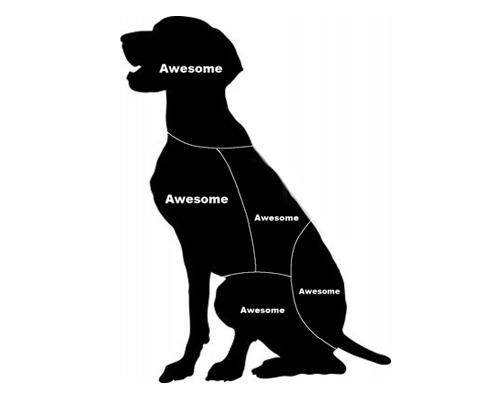
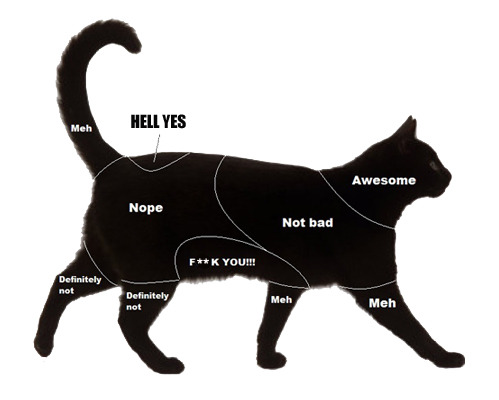
One of the newest Internet memes is the "how to pet a dog" and "how to pet a cat" charts. These charts are ostensibly instructional charts to show people the areas on a dog or cat's body that we should focus on when petting them.

But if you look at the dog chart, each area of the dog's body is marked "awesome." The artist clearly has determined, as so many dog guardians have, that dogs love to be touched, paid attention to, and handled in every possible way. Dogs love humans! They love us!
Compare the dog chart to the cat chart, however. Things get quite a bit trickier here. While there is one spot marked "awesome," there are a few spots marked "meh," a large area marked "nope," some "definitely not," and then there's an area marked "F**k you!" which should serve as a warning to everyone who can read. While clearly not all cats, or all dogs, are the same, these charts demonstrate the ways in which humans do indeed try to understand what companion animals want, how they feel, and what makes them different.

Finally, while rabbits are not nearly as "known" as dogs and cats are in mainstream culture, in the house rabbit world, people who live rabbits have gone to great lengths to try to understand their likes and dislikes, and what makes them tick. Ian Elwood, a House Rabbit Society educator, has used this specialized knowledge to create a rabbit petting chart. A quick look at the rabbit's chart should tell the uninformed that rabbits, like cats, have some areas of their bodies that are also off limits. So approach a rabbit's stomach, feet, and tail with caution!

What if cats had their own Internet?

I came across this macro the other day and thought it was a perfect way to capture how completely and utterly cats have taken over the Internet; I feel like an entire class can be devoted to discussing this one issue.

Saturday, January 19, 2013

Cats, Cats, Cats

Without cat pictures, cat memes, and cat videos, the Internet would collapse. There simply isn't enough pornography, sexting, and Words with Friends to keep the Internet operational without the presence of cats.

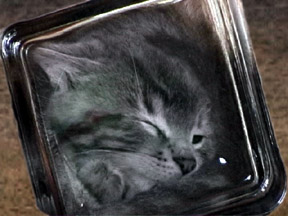
Cats have been ubiquitous on the internet since Bonsai Kitten, an Internet satire site which claimed to sell the tools to turn kittens into miniature "bonsai" cats by stuffing them into glass jars. The site outraged thousands of concerned citizens who flooded the phone lines of animal rights groups in the early 2000s, hoping to get the site shut down.

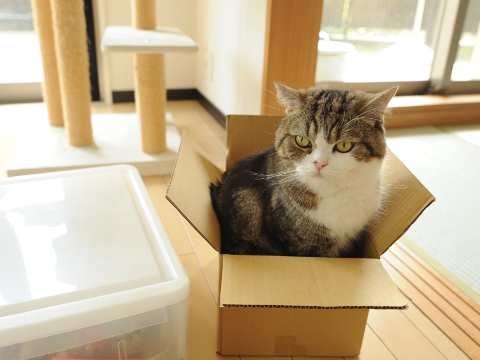
In the last few years, Maru has dominated the Internet. A Scottish fold cat who lives in Japan, Maru's fame derives from the fact that he is not only adorable, but he is especially adept at jumping into boxes. Maru's youtube channel is one of the most popular in all of Japan, and his videos have been viewed almost 200 million times.

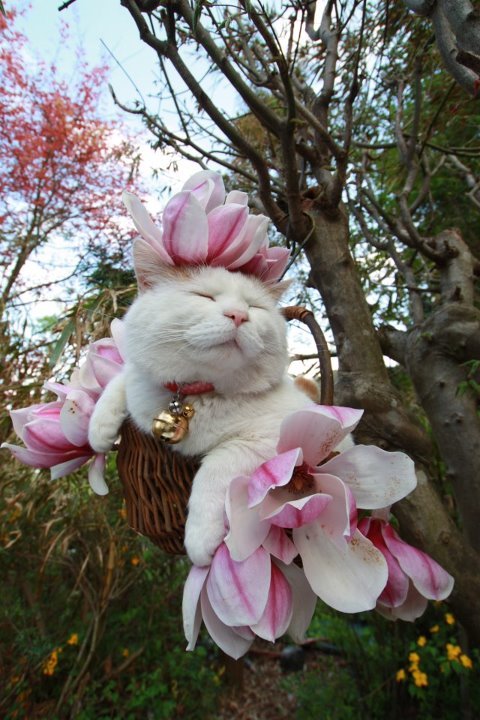
Another popular cat, also from Japan, is Shironeko. Shironeko is known as the most relaxed kitty in the world, for his habit of letting his caretaker place objects on his head for photographs, usually with what looks like a smile on his face.

Since late 2012, however, the most popular cat on the Internet is Grumpy Cat. Her real name is Tardar Sauce, and, according to her guardian, she is not grumpy at all. Yet thanks to the unfortunate shape of her mouth, she has become an incredibly popular Internet meme, being used to demonstrate disdain about Christmas (her popularity took off in December), happiness and love, and apathy about every subject.

Why are cats like Maru and Grumpy Cat so popular on the Internet? Cats are ubiquitous in our own lives--there are more cats in our homes than any other animal--so it makes sense that they would be the most popular Internet animal as well. They are also relatively serious and somewhat inscrutable--in fact, they don't have nearly as many facial muscles as do dogs, so it's hard to read their facial expressions, which means we often have to guess as to what they are thinking.  And finally, cats were not domesticated like dogs were--to be a partner to humans. For that reason, they're not easy to train, and in fact, it's often hard to get a cat to do anything at all that we want them to do. So the idea of using cats as online representations for our innermost thoughts, like Grumpy Cat, or watching them do clever and fascinating things, like Maru, or making them hold eggplants on their head, like Shironeko, is much more exciting with cats than with dogs, who, after all, live to please us.